On 17 March 2026, we held our final TWON evening event in Brussels, bringing together policymakers, researchers, civil society representatives, and practitioners to discuss how Europe can strengthen digital sovereignty in the digital public sphere.
What does digital sovereignty mean in practice when a handful of global platforms structure Europe’s public sphere? How can the European Union ensure that online social networks operate in line with democratic values, fundamental rights, and the protection of minors? And how can research support policymakers in shaping and enforcing a European model of platform governance? These questions framed the final TWON event in Brussels and reflected the growing urgency of addressing geopolitical tensions, systemic disinformation, and the societal impact of platforms such as TikTok.
During the evening, we presented the EU-funded research project “TWON – Twin of Online Social Networks” and discussed its results and implications. TWON examined how the design of online platforms influences the quality of online democratic discourse. At its core, the interdisciplinary team developed an innovative “digital twin” approach: instead of experimenting on real users, simulations model how different platform architectures and ranking algorithms influence the quality of online debate and exposure to harmful content.
By translating these findings into policy recommendations and discussing them in participatory Citizen Labs across Europe, TWON contributed to evidence-based policymaking and digital citizenship. The consortium brought together leading European research institutions, including the University of Amsterdam, Karlsruhe Institute of Technology (KIT), University of Belgrade, University of Trier, FZI Forschungszentrum Informatik, Jožef Stefan Institute, and the Robert Koch Institute (RKI).
We were honoured to welcome Katarina Barley, Vice-President of the European Parliament, and Raegan MacDonald (Aspiration Tech) as keynote speakers and panelists. Katarina Barley reflected on the importance of existing regulatory frameworks such as the Digital Services Act (DSA), while emphasising the continued need for research initiatives like TWON to support their implementation. Raegan MacDonald highlighted the importance of connecting governance debates with perspectives from civil society and the tech policy community.
The event focused in particular on how Europe can strengthen its capacity to research, regulate, and strategically shape online platforms. This included discussions on establishing effective research infrastructures for platform data access and data donation, reinforcing European digital sovereignty over communication infrastructures, and identifying windows of opportunity in the evolving global digital policy debate.
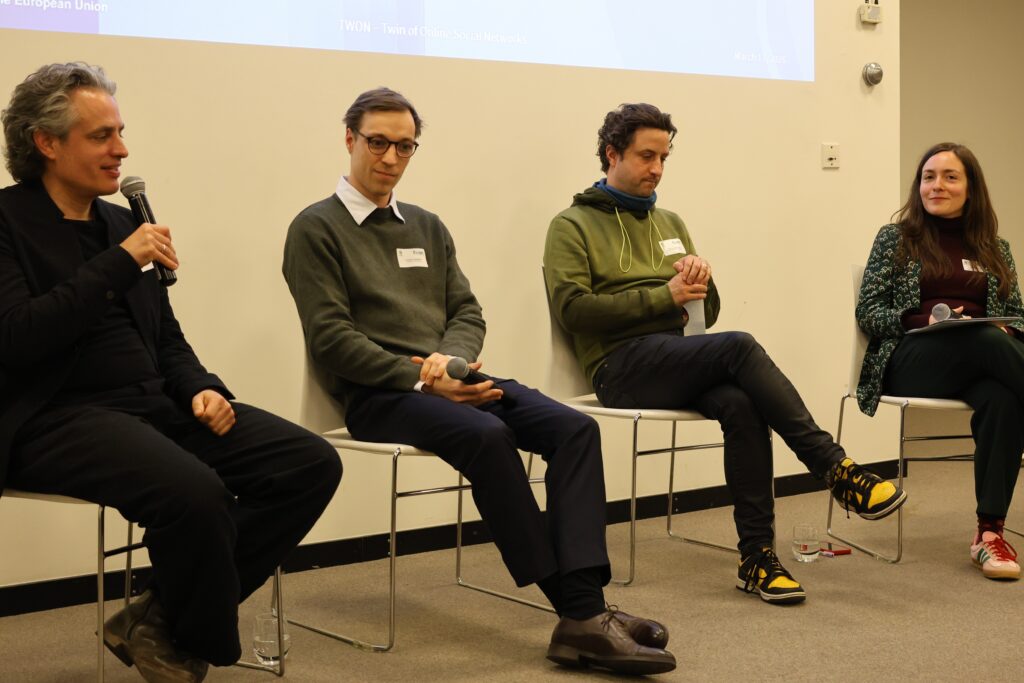
In a joint panel moderated by Cosima Pfannschmidt (FZI), Achim Rettinger (University of Trier), Michael Mäs (KIT), and François t’Serstevens (University of Amsterdam) discussing TWON’s core approach, key findings, and policy recommendations. The project demonstrated how simulation-based analyses can support policymakers in understanding the societal effects of platform design
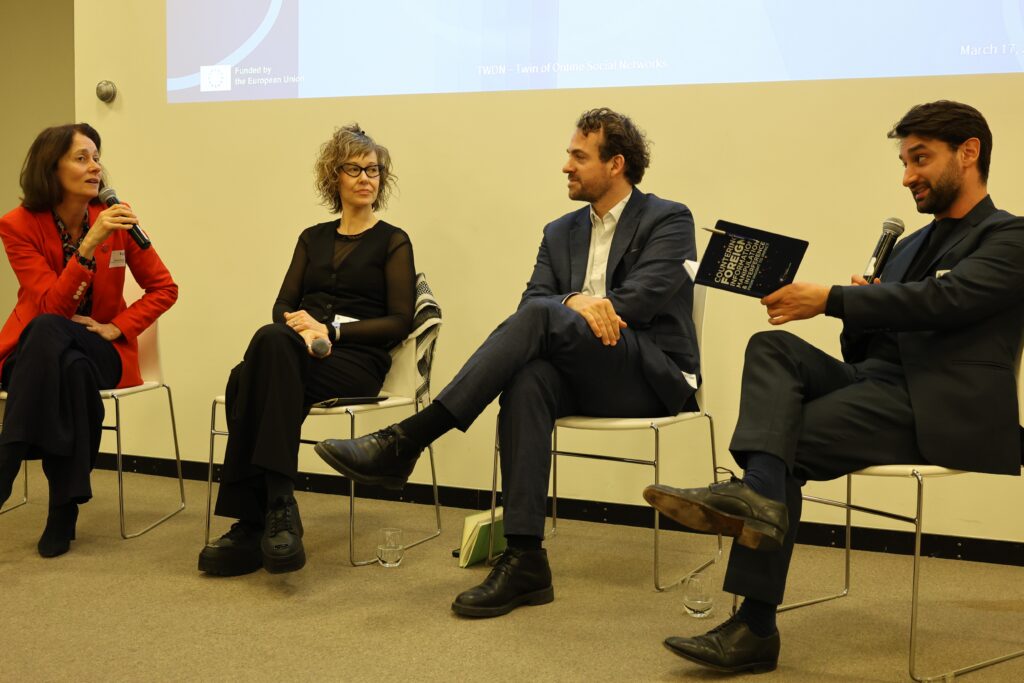
Moderated by Benjamin Fischer (CeMAS), the panel with Dr. Jonas Fegert (FZI), Katarina Barley and Raegan MacDonald explored how research and policy can jointly shape Europe’s digital future. Participants emphasised the importance of effectively enforcing existing regulation on very large online platforms, developing democratic European platform alternatives, designing digital tools that are engaging without fostering addictive dynamics, and strengthening transparency through improved access to platform data.
Bringing together policymakers, regulators, researchers, journalists, and civil society practitioners, the event created an important space to connect research insights with ongoing legislative and enforcement debates in Brussels. Before and after the stage programme, participants explored interactive project demonstrators and engaged in informal exchanges with project partners from across Europe.
We thank all speakers and participants for contributing to an insightful and productive discussion.