Workshop

Research on Open Source LLM Safety at HICSS 2026

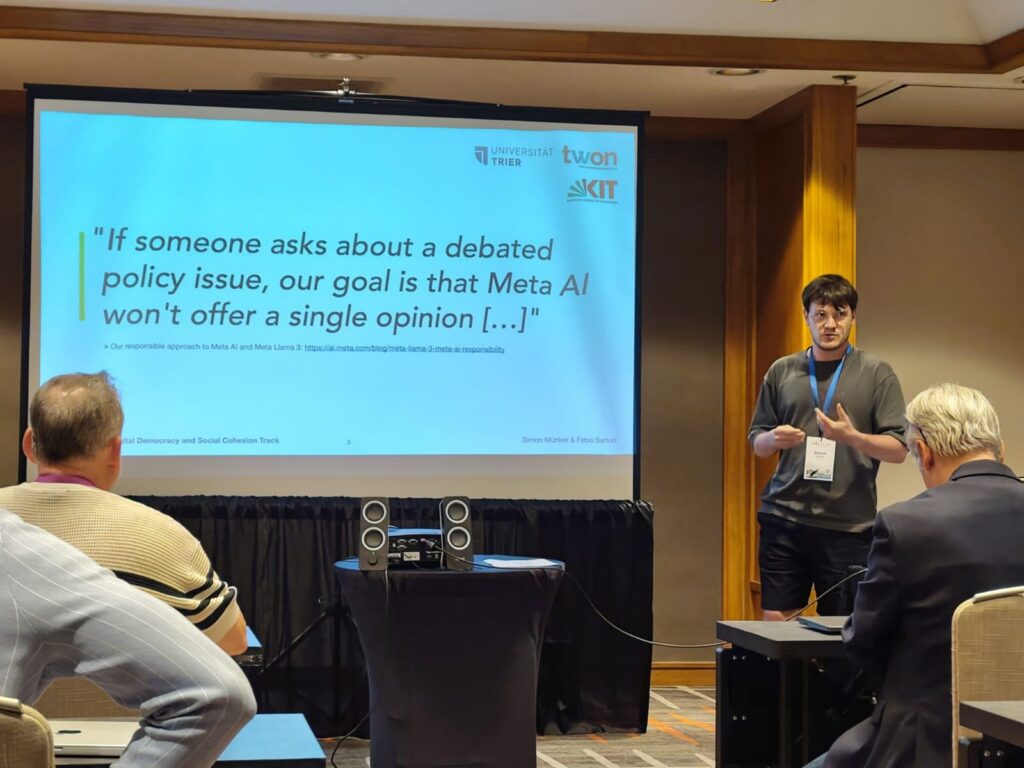
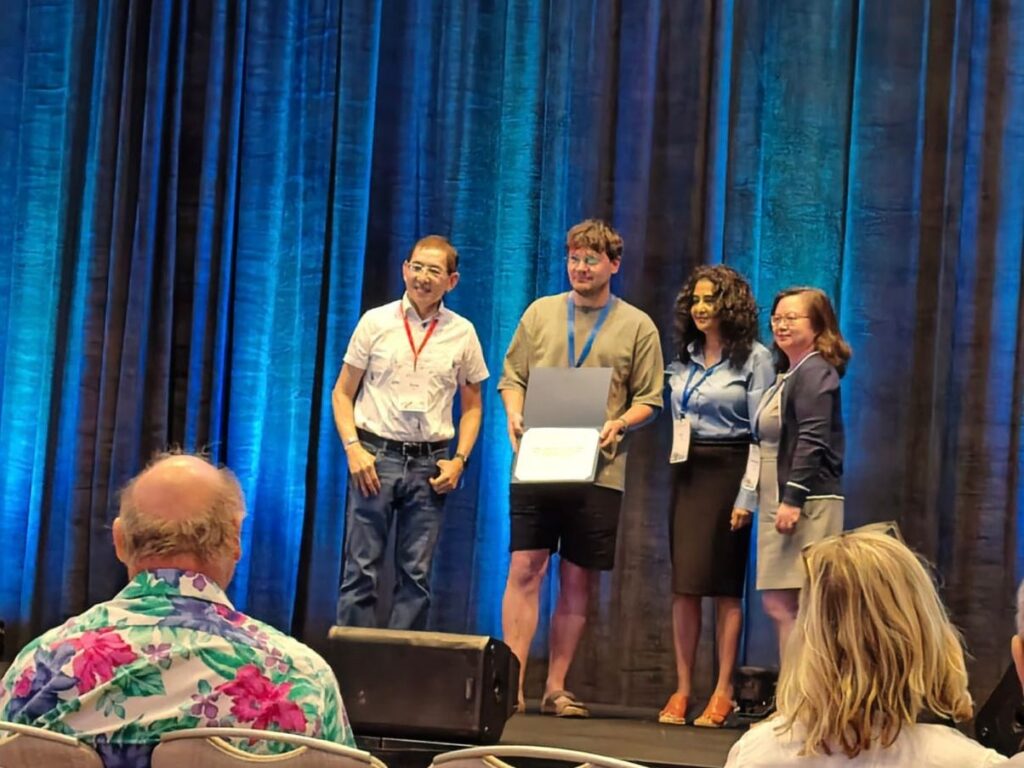
From January 6-9, 2026, TWON researcher Simon Münker presented his paper at the Hawaii International Conference on System Sciences (HICSS), one of the leading international conferences in the field of information systems and digital innovation.

The paper addresses societal risks associated with open source Large Language Models and evaluates the effectiveness of existing safety and guardrail mechanisms. Together with his co author Fabio Sartori, Simon Münker received the Best Paper Award for this research.

The study systematically examines guardrail vulnerabilities across seven widely used open source LLMs. Using advanced natural language processing classification methods, it identifies recurring patterns of harmful content generation under adversarial prompting. These vulnerabilities were first observed during earlier research activities within the TWON project, where initial experiments revealed persistent weaknesses in model safety mechanisms.

The findings show that several prominent models consistently produce content classified as hateful or offensive. This raises concerns about the potential implications of open source LLMs for democratic discourse and social cohesion. In particular, the results challenge public safety assurances by model developers and point to discrepancies between stated safeguards and observed model behavior.

The research contributes to ongoing discussions on responsible AI development and the governance of AI systems that shape online communication and public discourse. It underlines the need for more robust, transparent and empirically tested safety mechanisms in open source AI ecosystems.

The paper was presented as part of the Digital Democracy Minitrack at HICSS 2026.
Announcing SemGenAge: 1st Workshop on Semantic Generative Agents on the Web at ESWC 2025

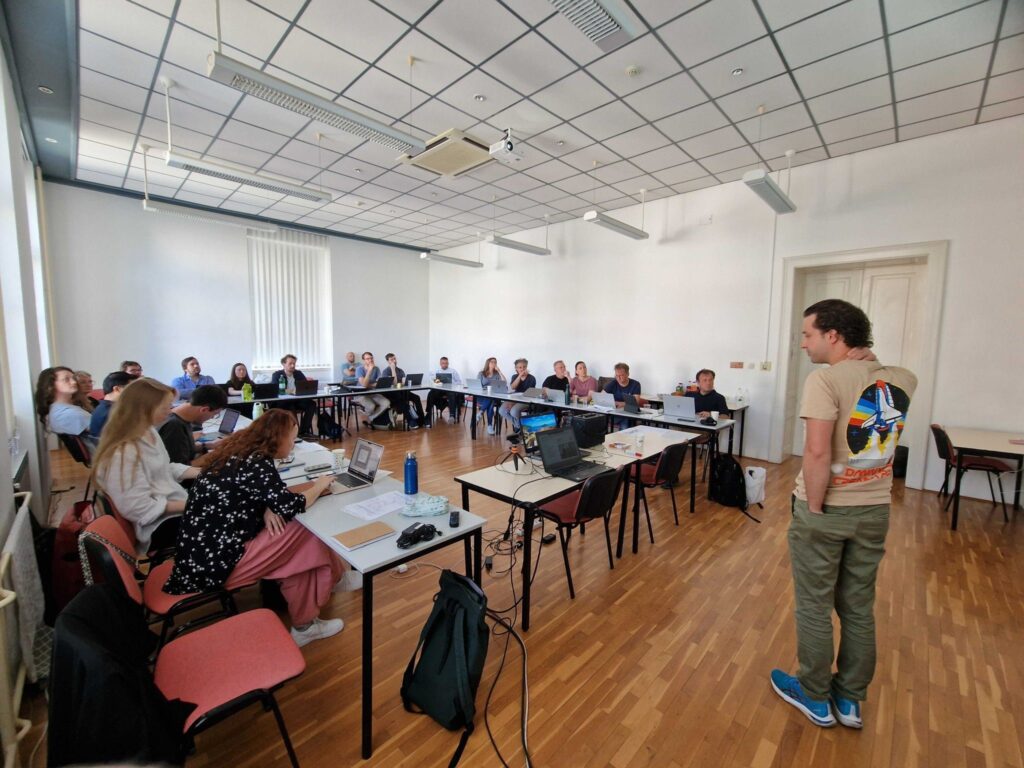
We are excited to announce SemGenAge: The 1st Workshop on Semantic Generative Agents on the Web, taking place on June 2, 2025 in Portorož, Slovenia, as an official workshop of the Extended Semantic Web Conference (ESWC 2025).

SemGenAge explores the intersection of Semantic Technologies, Neurosymbolic AI, and Generative Agents, bringing together researchers and practitioners to investigate how intelligent agents can operate on the web in interpretable, controllable, and socially-aware ways.

Whether you are developing the next generation of web agents or studying their impact on digital societies, SemGenAge offers a unique forum for interdisciplinary exchange.

Dr. Matthias Nickles – School of Computer Science, National University of Ireland, Galway

Dr. Denisa Reshef Kera – Senior Lecturer, Bar-Ilan University, Interdisciplinary Studies Unit


📍 Location: Portorož, Slovenia

📅 Date: June 2, 2025

🔗 Hosted at: ESWC 2025 – Extended Semantic Web Conference


Find out all about our workshop program and our speakers here.

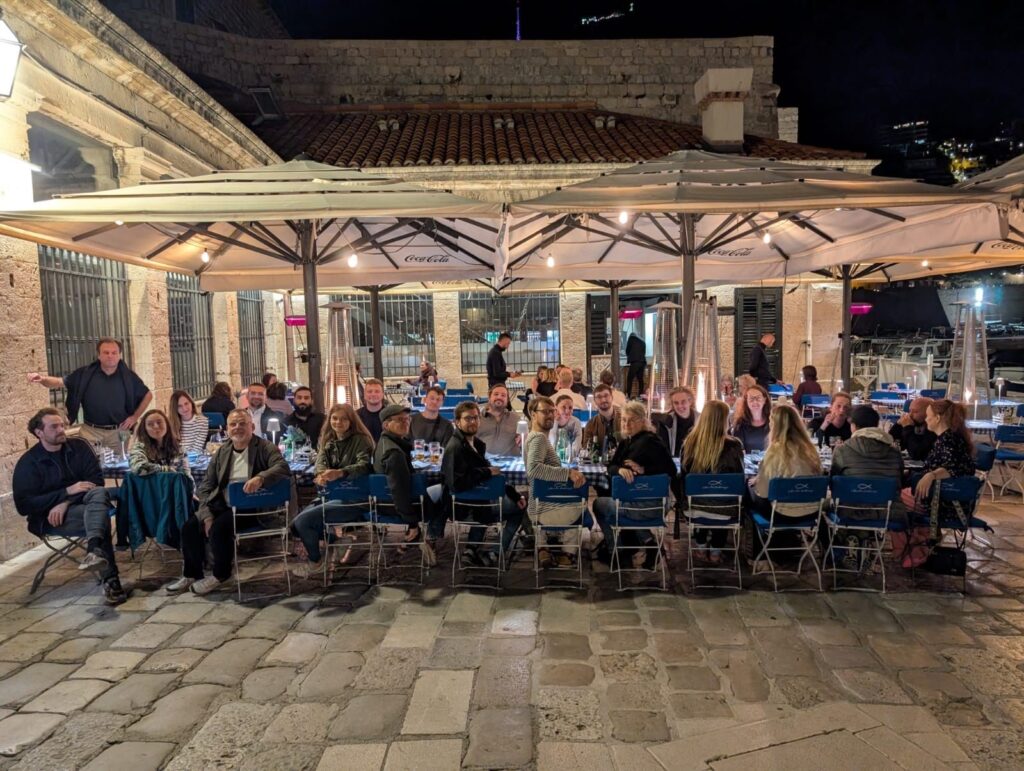
Consortium Meeting in Dubrovnik

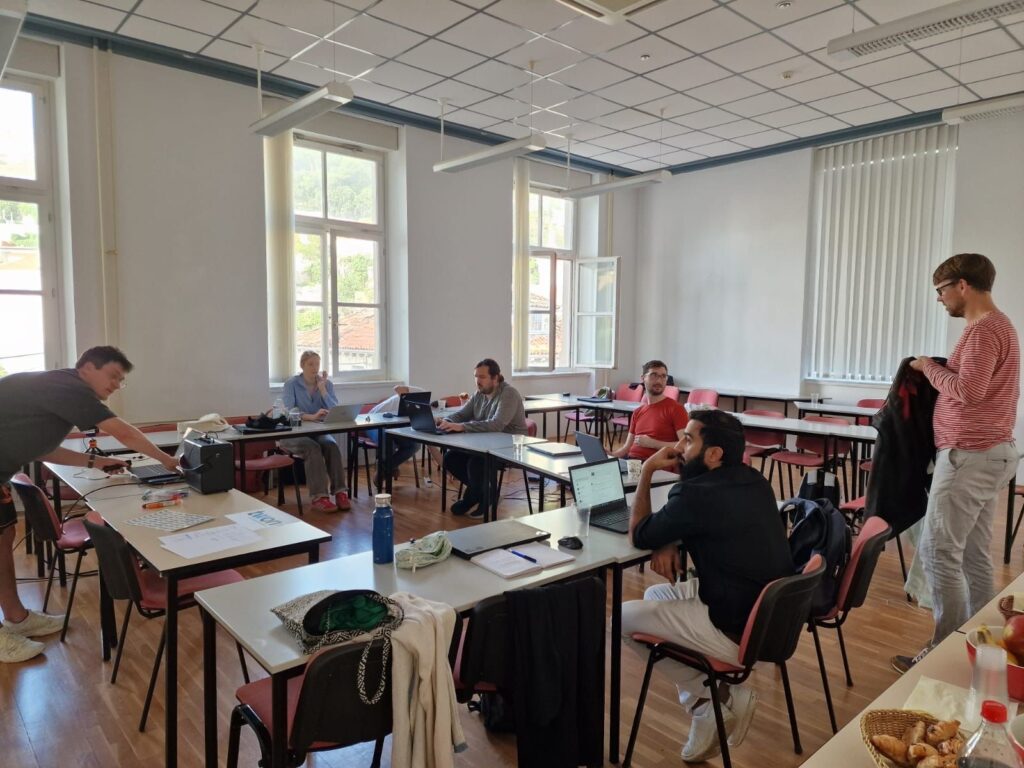
The first half of our 3-year project has passed. So, it was time to come together as a consortium, share our progress and discuss the next steps.

Hosted by Marko Grobelnik and his team, we met at Jozef Stefan Institute’s partner organization, the Center for Advanced Academic Studies, in beautiful Dubrovnik. After an opening keynote by Prof. Marko Tadić who is a linguist at the University of Zagreb, we updated each other on the status of the TWON and decided to build a demonstrator – the Twonny! The Twonny will help us to communicate the results and insights of our complex research project ot a wider public. Apart from that we discussed the design of our case studies with Robert Koch Institute (RKI) and Slovenska tiskovna agencija (STA) and planned our work in the coming months.

The last day was kicked off with a workshop by the FZI Forschungszentrum Informatik on stakeholders and policy recommendations. The advisory board member Judith Peterka delivered an input and the team worked on policy recommendations, that participants of DialoguePerspectives’ TWON Citizen Lab had drafted. The day ended with a hackathon to find and fix bugs together.

Of course we also enjoyed the sea, went for a swim and had excellent Croatian seafood – and took the opportunity to grow together as a team and recharge our batteries for the work ahead.

How to build digital Spaces: Modeling, data analysis, and qualitative approaches.

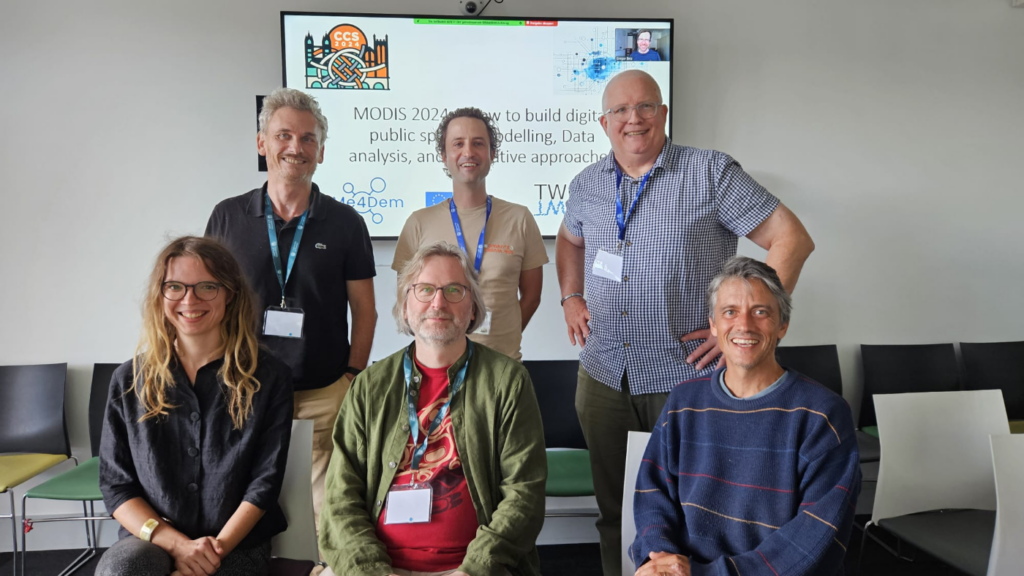
MODIS 2024 Workshop Recap

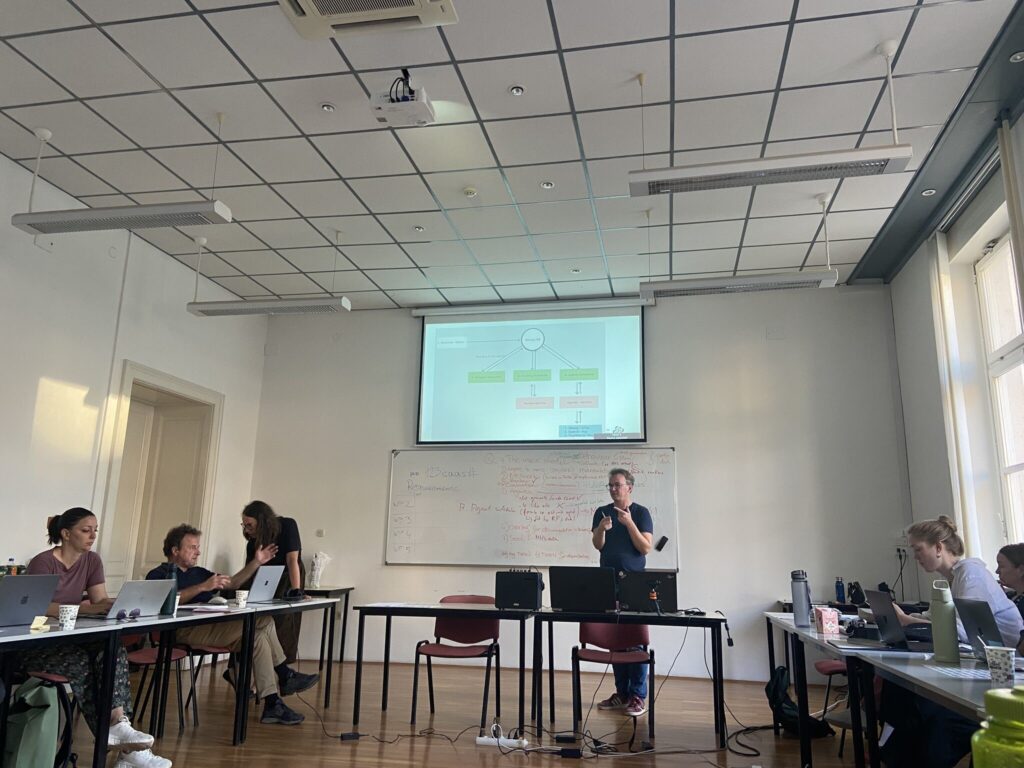
The MODIS 2024 workshop, recently held as part of the Horizon Europe projects TWON and SoMe4Dem, successfully gathered experts from various fields to explore the role of online social networks (OSN) in shaping public opinion and democracy. Attendees discussed the latest research on misinformation, AI’s influence on digital platforms, and strategies to counter harmful narratives. The event highlighted key advancements in modeling user behavior and fostering resilience to propaganda, paving the way for future innovation in this critical area. OSNs were once believed to have an enormous potential to foster democratic debates and processes. In recent years, however, OSNs have been associated with various challenges for democracies and public discourse. These debates are often structured around key words such as echo chambers and filter bubbles and have garnered immense public attention. Research from computational social sciences, on the other hand, has painted a more nunanced picture. The symposium brought together insights from a broad range of research approaches, reflecting on methodologies and discussing future pathways and research agendas.

TWON’s Michael Mäs opened the workshop with his introduction. Later in the workshop he provided insights into his work as part of the TWON consortium, highlighting the scientific, technical, and ethical challenges that are linked to building a Twin of an Online Social Network (TWON).

For more details, visit the MODIS 2024 page.

Attendees of the MODIS 2024 symposium.