pfannschmidt

TWON Citizen Lab #4 in Brussels: On Overcoming Polarization

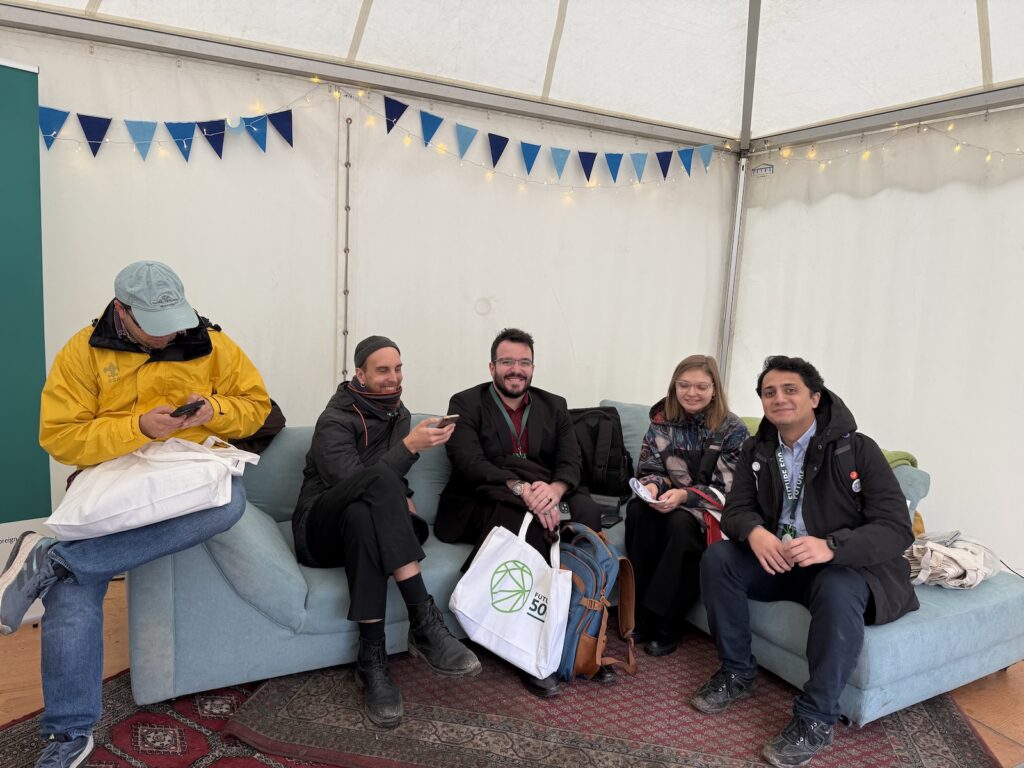
The fourth and final TWON Citizen Lab took place in Brussels from 14 to 18 March 2026. Bringing together young leaders from various communities from all over Europe came together to discuss a digital and sovereign European future. The program was a mixture of input and discussion from our TWON researchers, impulses from external researchers and civil society organizations, reflexional workshops and a public evening event – all centered around tackling hate, misinformation and polarization in the age of AI and tech-oligarchs, while also addressing questions of digital sovereignty in times of growing geopolitical tensions.

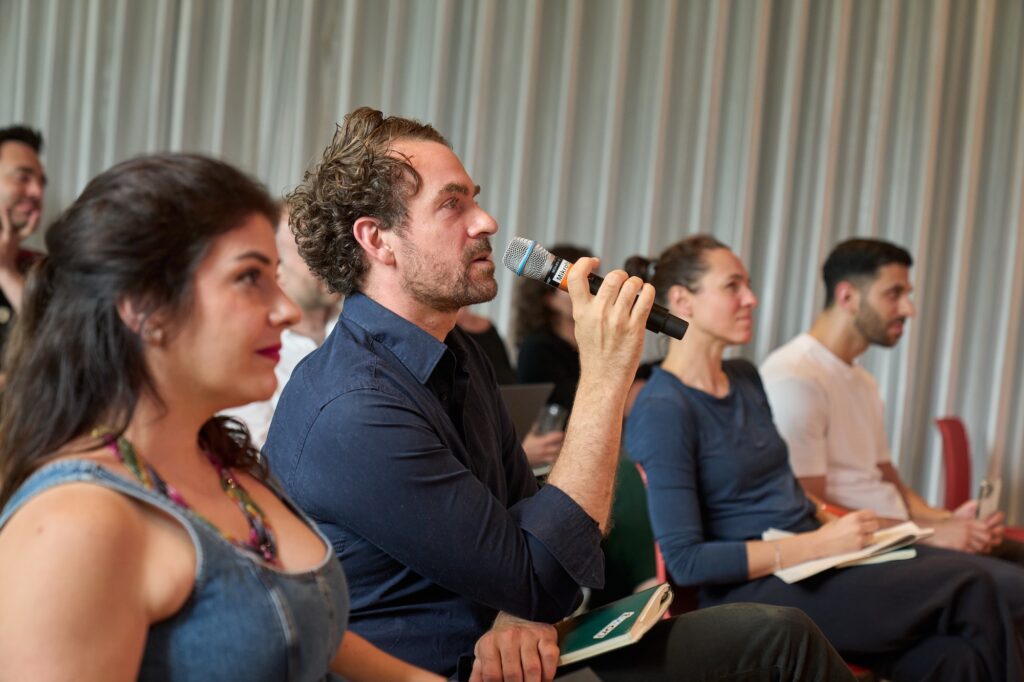
Cosima Pfannschmidt opened the Citizen Lab by introducing the group to the TWON project, its goals, and its urgency. Prof. Dr. Damian Trilling from the University of Amsterdam initiated a critical conversation on the limits of current research on social media dynamics, challenging assumptions about echo chambers, filter bubbles, and the spread of disinformation.

Simon Münker and Christoph Hau from Trier University, presented the TWON demonstrators, giving participants the opportunity to test out the TWONy simulations. Prof. Dr. Achim Rettinger from Trier University further addressed the complex intersection of AI agents and online discourse.

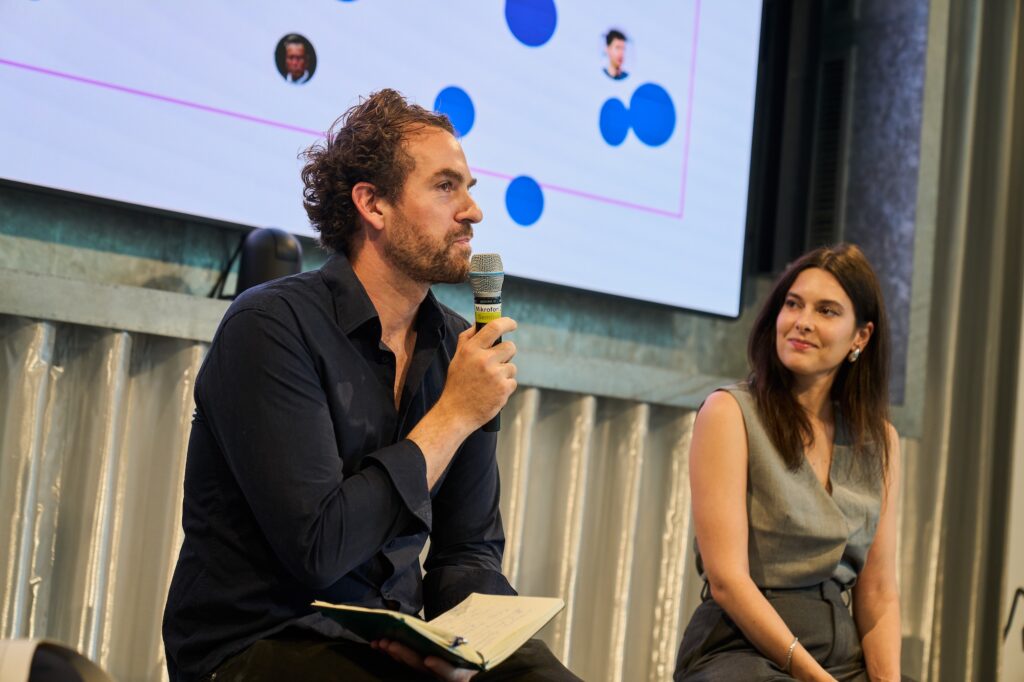
At the public evening event, the results of three years of TWON research were presented, with a deeper focus on digital sovereignty and the role of research in shaping evidence-based platform governance. In the first panel, moderated by Cosima Pfannschmidt (FZI), Prof. Achim Rettinger (Trier University), Michael Mäs (KIT), and François t’Serstevens (University of Amsterdam) presented TWON’s core ideas, key findings, and policy recommendations. In the second panel, moderated by Benjamin Fischer (CeMAS and Bellycat), Dr. Jonas Fegert (FZI), Katarina Barley (Vice President of the European Parliament) and Raegan MacDonald (Aspiration) discussed how research and policy can jointly shape Europe’s digital future and which steps can be taken to strengthen Europe’s digital sovereignty. 

Beyond this the Citizen Lab included fantastic inputs from external researchers and civil society organizations: 

Community Work in Conflict and Post-Conflict Settings: Experiences from Eastern Europe (Focus on Ukraine)  with Igor Mitchnik (Executive Director Austausch e.V.)

How Polarisation Works: Recognising and Interpreting Political Narratives  with (Atahan Demirel, Policy Advisor on Anti-Discrimination in the Berlin House of Representatives)

Invoking the Past, Legitimising the Present: The Use of Collective Memory in Digital Diplomacy with Maximiliane Linde (Researcher at FZI and Former Board Member of DialoguePerspectives e.V.)

Historicising the Present: Antisemitism and Racism in Israel-Palestine Social Media Discourses with Furkan Yüksel (Lecturer in Historical-Political Education)

Public Event “Voices Rising: Rebuilding Bridges. Dialogue, Trust and Solidarity Post-October 7th with Camila Piastro (European Union of Jewish Students) Barbara von Freytag (Journalist, Political Analyst) Furkan Yüksel (Political Educator)Prof. Dr. Achim Rettinger (Trier University, TWON) Moderation: Igor Mitchnik (Executive Director, Austausch e.V.)

Together Instead of Against Each Other: An Attempt to a Differentiated Dialogue on the Israeli-Palestinian conflict (A German Perspective) with Sophie Orentlikher (Socio-Political Educator and Clinical Social Worker, Centre for Applied Research on Education and Diversity at the Catholic College of Aachen) and Mohammed-Arfan Ashmawi (Social Educator and Clinical Social Worker, Research Assistant at the Centre for Applied Research on Education and Diversity at the Catholic College of Aachen)

Media Literacy in a Digital World with Amie Liebowitz (Journalist, Broadcast Presenter and Media Consultant World Café

The Citizen Lab concluded with a strong call for greater EU sovereignty in the digital sphere. The policy proposals developed throughout the week emphasized the need to regulate algorithmic systems, increase transparency, and create digital environments that enable meaningful dialogue rather than polarization. The Brussels Citizen Lab 2026 reminded us that social media must be more effectively regulated and that existing legislation, such as the Digital Services Act, must be consistently implemented and reinforced. At the same time, it highlighted the importance of enabling citizens to better understand what happens behind algorithmic systems.

We are deeply grateful for the Brussels Citizen Lab 2026, hosted by the TWON partner DialoguePerspectives. It was an unforgettable gathering that brought together European leaders committed to shaping democratic digital spaces. A heartfelt thank you to DialoguePerspectives and to everyone who made this experience so meaningful. It was an honor to be part of a space where listening, questioning, and reimagining Europe is not only possible but already happening.
A truly meaningful final Citizen Lab and a worthy farewell.
New Publication: Simulating Algorithmic Personalization and Polarization

We are pleased to announce a new peer-reviewed publication by Ljubiša Bojić, co-authored with Velibor Ilić, Veljko Prodanović, and Vuk Vuković, published in Chinese Political Science Review.

The paper introduces the Recommender Systems LLMs Playground (RecSysLLMsP), an agent-based simulation framework designed to study how recommender systems and large language models jointly shape engagement, emotional dynamics, and polarization in social media environments.

The study models a synthetic social media ecosystem with 100 agents grounded in real psychometric and demographic data. Agents interact through feeds with progressively increasing levels of personalization, while content is generated and adapted using large language models. This setup enables controlled observation of how algorithmic personalization affects collective behavior.

Key findings show that moderate personalization maximizes engagement, while full personalization significantly reduces content diversity and amplifies both structural and affective polarization. Network modularity increases sharply as personalization deepens, indicating the emergence of echo-chamber dynamics. At the same time, the simulation demonstrates that LLM-based agents can reproduce realistic patterns of emotional contagion and ideological clustering.

RecSysLLMsP provides a transparent and reproducible “digital laboratory” for testing recommender system designs and policy interventions before they are deployed at scale. The framework has direct relevance for research in computational social science, responsible AI, platform governance, and democratic communication.

Publication details:
An Agent-Based Simulation of Politicized Topics Using Large Language Models: Algorithmic Personalization and Polarization on Social Media
Chinese Political Science Review
DOI: 10.1007/s41111-025-00326-x

Rethinking AI for Democratic Societies – Joint Event in Ljubljana, October 14

On October 14, partners from the projects AI4Gov, SOLARIS, and TWON gathered in Ljubljana to explore how artificial intelligence can support democracy, transparency, and citizen participation.

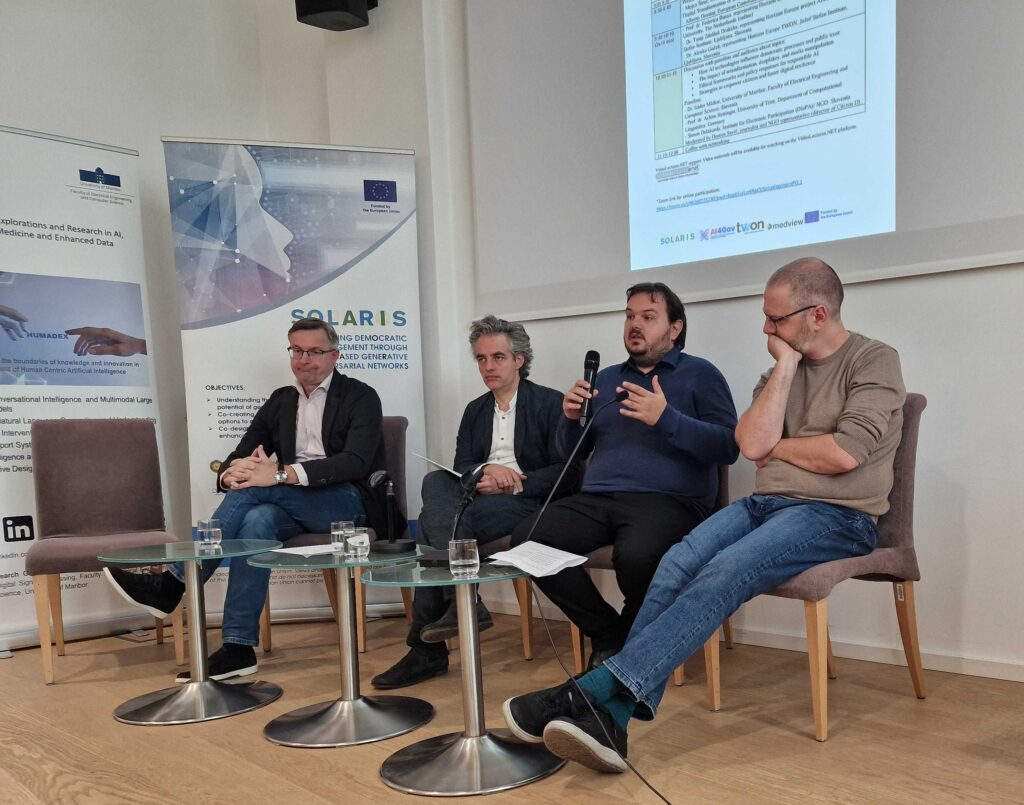
The event titled AI, Democracy and the Public Interest: Building Resilient Digital Futures brought together experts from research, policy, civil society, and industry. The program included project presentations, followed by a panel discussion featuring contributors such as Federica Russo and Tanja Zdolsek Draksler.

Hosted at Hotel City Ljubljana, the event AI, Democracy, and the Public Interest: Building Resilient Digital Futures brought together experts from research, policy, civil society, and industry. The program included project presentations, followed by a panel discussion featuring contributors such as Federica Russo and Tanja Zdolšek Draksler.

Our researcher Alenka Guček introduced TWON in an expert talk, while Achim Rettinger participated as a panelist in a discussion on the influence of AI technologies on democratic processes and public trust.

The event concluded with networking and informal exchanges on how to build ethical, democratic, and human-centered digital futures.

Discussions throughout the day highlighted the need for greater transparency and accountability in AI systems, stronger cooperation across sectors, and increased public understanding of AI’s societal impact. The full recordings are now available online.

As TWON, we emphasize the importance of strengthening connections between European research and policy efforts on AI and democracy. Our sincere thanks go to the Solaris and AI4Gov teams for making this event possible.

Out now: Our new demonstrator tool TWONderland

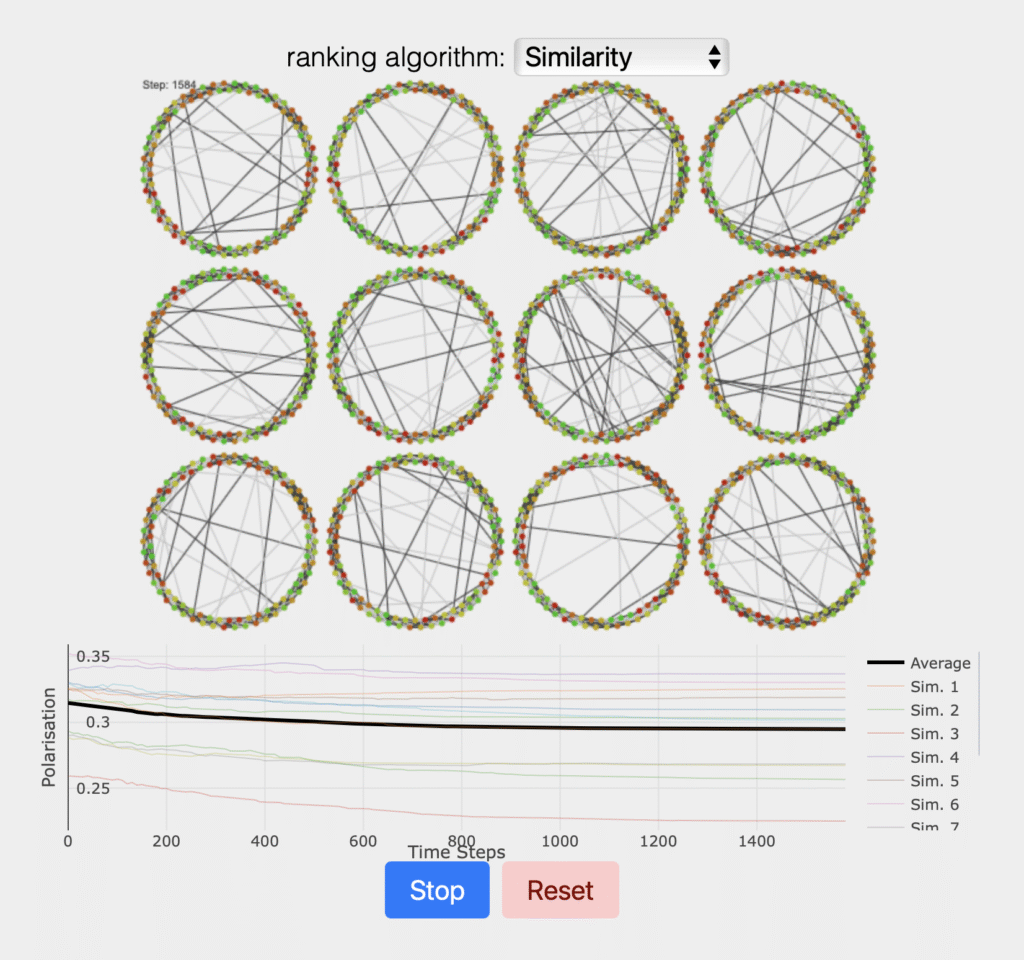
In the past weeks, our TWON researcher Fabio Sartori (KIT) and his colleagues worked on a new demonstrator tool to make the dynamics of Online Social Networks tangible for the broad public. The result is: TWONderland!

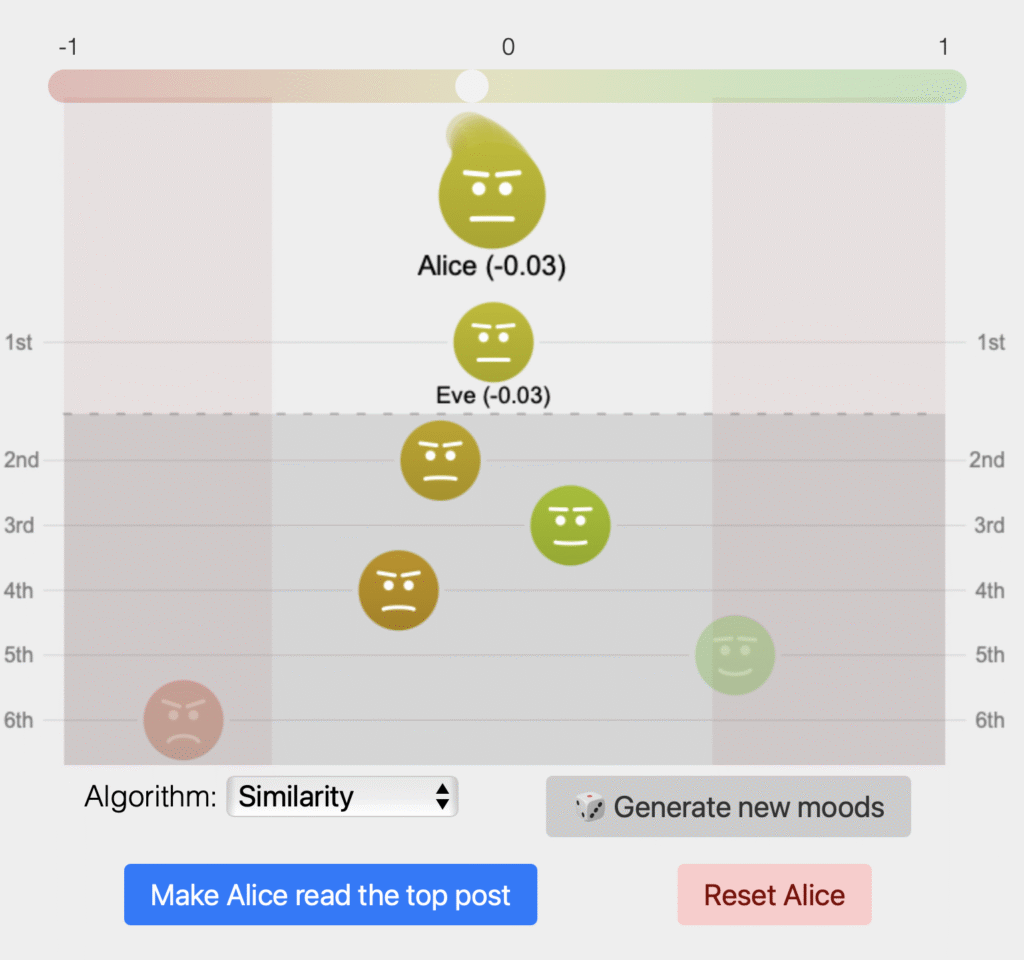
In our simulation TWONderland, we assign the user the job as the lead designer of a new Online Social Network. In a playful and interactive way, users explore how as the platform designer, they influence the interaction on the platform and how even the tiniest design choices can ripple out to shape behavior, sentiments and relationships between the users – and potentially spark fragmentation and fuel polarization.

Unique about this demonstrator is the step-by-step walkthrough of the functionalities of Online Social Networks (OSNs). The user starts by assigning moods – from aggressive to calm – to fictive platform users. We then visualize how their fictive users are connected to each other on the platform, and how their moods adapt as they are confronted with posts of each other. In TWONderland, every OSN user participates within a specific sentiment corridor, meaning that they will interact with and adapt to other users as long as their differences in sentiment are not too significant. Here, for instance, a very calm user would not immediately interact with somebody who is very aggressive. However, in our demonstrator, we visualize that the sentiment on a platform can still shift in positive and negative directions gradually. These network dynamics were modelled based on the Axelrod model (for further information and technicalities please refer to our Deliverable).

After getting an understanding of network dynamics, the user is asked to experiment with alternative platform mechanisms that determine what users (and their moods) influence their own fictive platform user. Based on the ranking algorithms the user sets, posts with different moods – again, aggressive to calm – will become visible to their fictive character, which influence their mood. From this individual level, the demonstrator then moves on to visualizing bigger networks in which many users influence each other based on the designated platform mechanics. To understand how users influence each other’s mood on OSNs, the user can run comparative simulations and experiment how polarization is fueled or minimized only through the ranking mechanics.

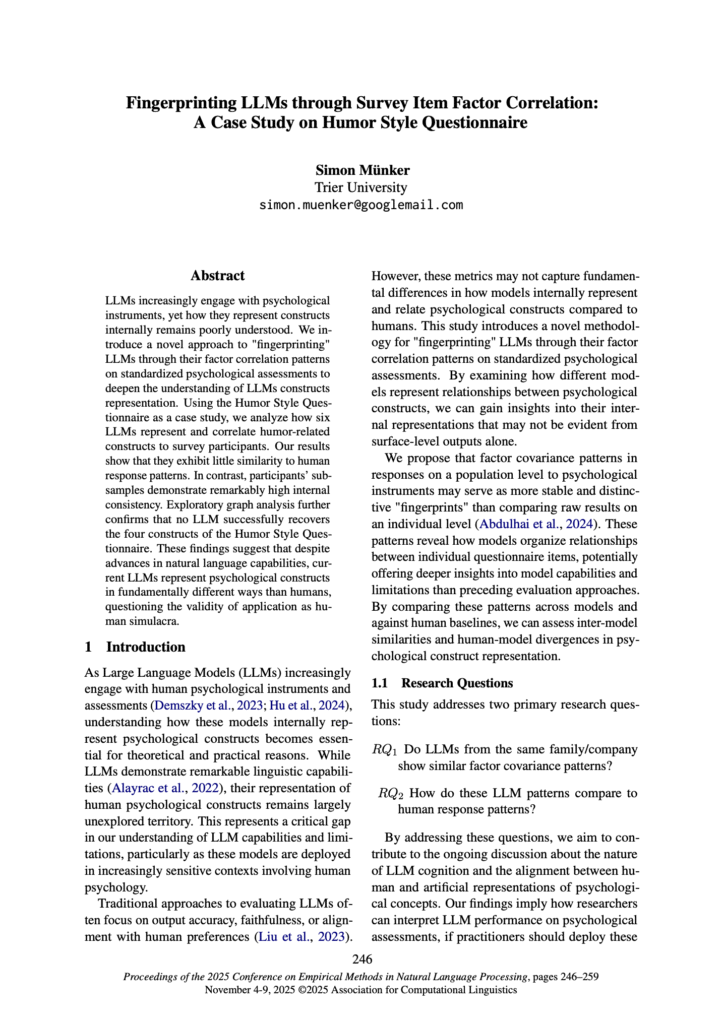
New paper by TWON researcher Simon Münker: Fingerprinting LLMs through Survey Item Factor Correlation: A Case Study on Humor Style Questionnaire

We are proud to announce that our researcher Simon Münker published a new paper with the title: Fingerprinting LLMs through Survey Item Factor Correlation: A Case Study on Humor Style Questionnaire. It is published in the Proceedings of the 2025 Conference on Empirical Methods in Natural Language Processing and the results will be presented in Shanghai on 5 November.

LLMs increasingly engage with psychological instruments, yet how they represent constructs internally remains poorly understood. Simon Münker introduces a novel approach to “fingerprinting” LLMs through their factor correlation patterns on standardized psychological assessments to deepen the understanding of LLMs constructs representation. Using the Humor Style Questionnaire as a case study, he analyzes how six LLMs represent and correlate humor-related constructs to survey participants. His results show that they exhibit little similarity to human response patterns. In contrast, participants’ subsamples demonstrate remarkably high internal consistency. Exploratory graph analysis further confirms that no LLM successfully recovers the four constructs of the Humor Style Questionnaire. These findings suggest that despite advances in natural language capabilities, current LLMs represent psychological constructs in fundamentally different ways than humans, questioning the validity of application as human simulacra.

It’s a wrap: CitizenLab 2025 in Chemnitz

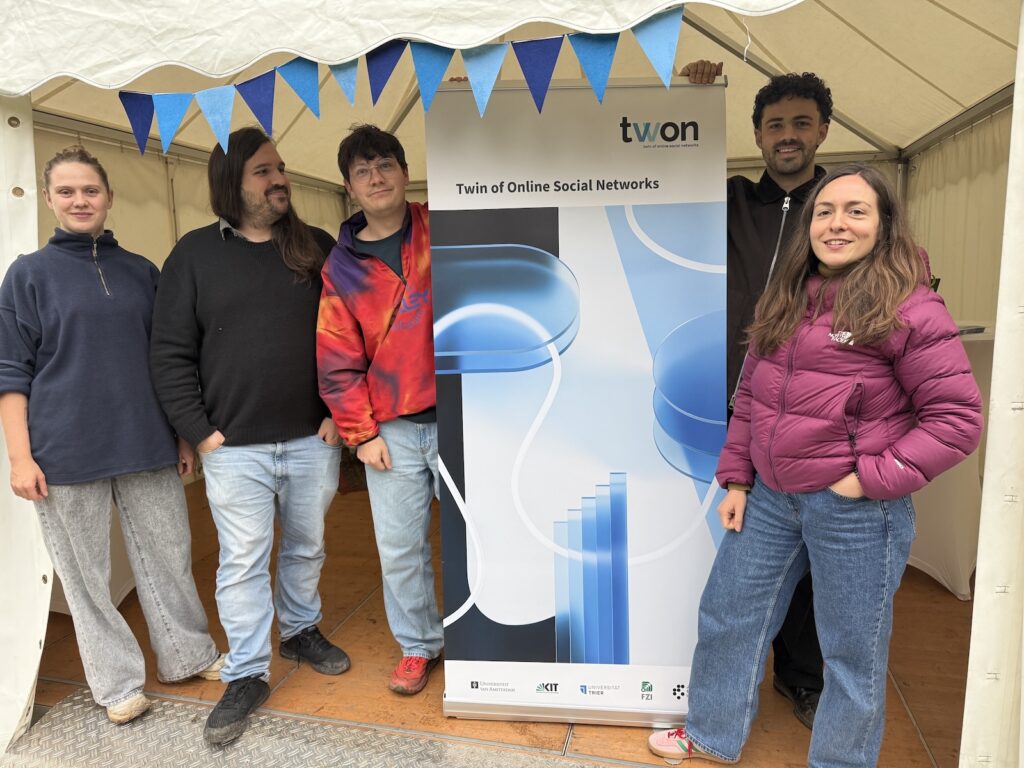
On 8 October, we hosted another CitizenLab in the Stadthallenpark in Chemnitz, where we got to speak with citizens about our research on Online Social Networks.

We presented our demonstrators MicroTWONY, MacroTWONY, and TWONderland to interested citizens and participants, had inspiring conversations about the impact of Online Social Networks on society and democracy, as well as possibilities for regulation and ethical design. We are glad to see how many participants enjoyed experimenting with the demonstrators and exploring how digital dynamics become tangible!

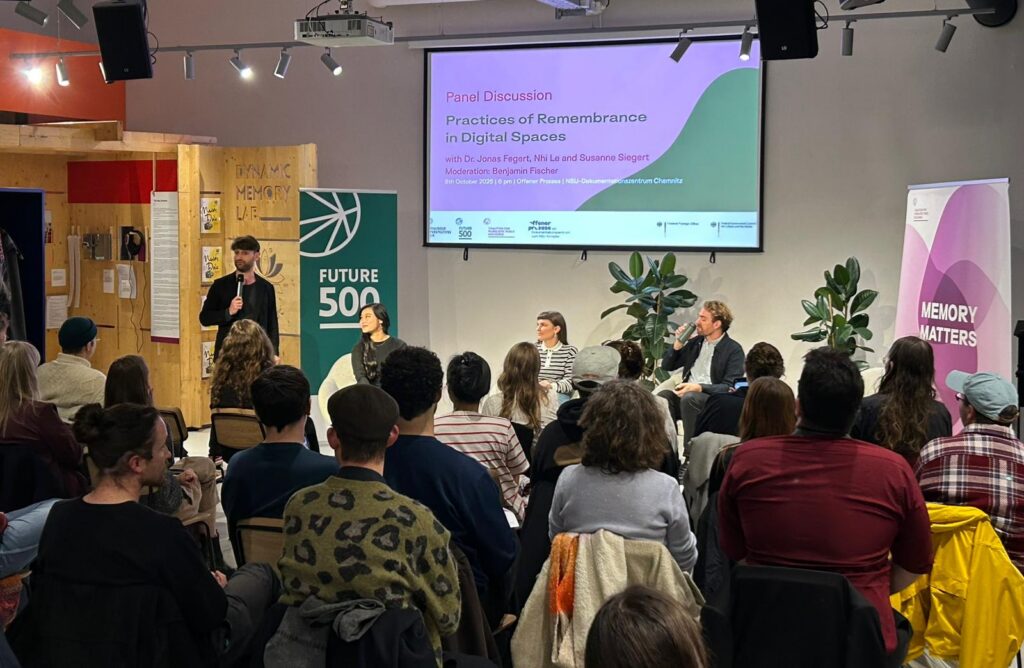
In the evening, we joined an interesting event on memory culture in digital spaces at the NSU Documentation Center with TWON researcher Jonas Fegert, journalist Nhi Le and Susanne Siegert from the channel @keineerinnerungskultur, moderated by Benjamin Fischer. The discussion focused on the opportunities social networks offer for democratic education, especially for younger audiences, and on the limitations imposed by platform mechanisms that tend to amplify hate speech and misinformation.

A day full of dialogue, reflection, and future perspectives – thank you for everybody who was a part of it, and we’re looking forward to the next CitizenLab!

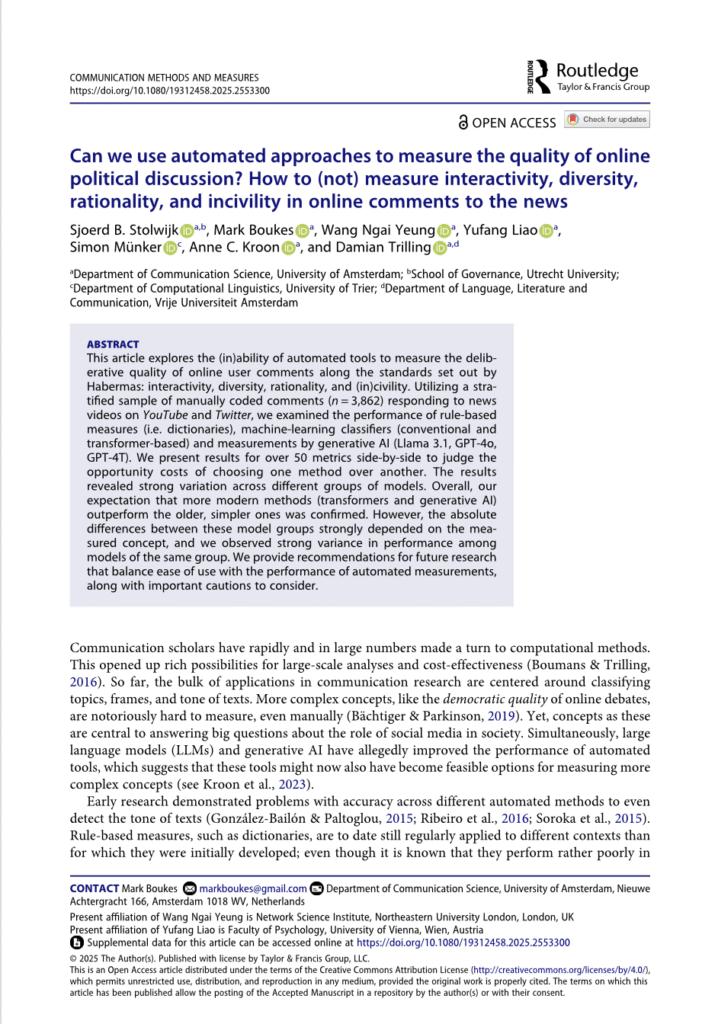
New publication: Can we use automated approaches to measure the quality of online political discussion?

We’re proud to announce that our consortium members Sjoerd Stolwijk, Damian Trilling (both University of Amsterdam) and Simon Münker (Trier University) contributed to a freshly published paper on measuring the debate quality of online political discussions. The paper was released in the “Communication Methods and Measures” journal by Routledge and is open access.

Our researchers review how debate quality has been measured in communication science, and systematically compare 50 automated metrics against numerous manually coded comments. Based on their experiments, they were able to give clear recommendations for how to (not) measure debate quality in terms of interactivity, diversity, rationality, and (in)civility according to Habermas.

Their results show that transformer models and generative AI (like Llama and GPT-models) outperform older methods, yet there is variance and the success depends on the measured concept, as some (e.g. rationality) remain difficult to capture also by human coding. Which measure should be preferred for future empirical applications is likely dependent on the
objective of the study in question. For some genres, language and communication style (e.g. satire), it is strongly advised to test the accuracy of automated methods against the human interpretation beforehand, even if methods are widely used. Some approaches and implementations performed so poorly that they are not suitable for studying debate quality.

Zero-shot prompt-based classification @ACL Vienna

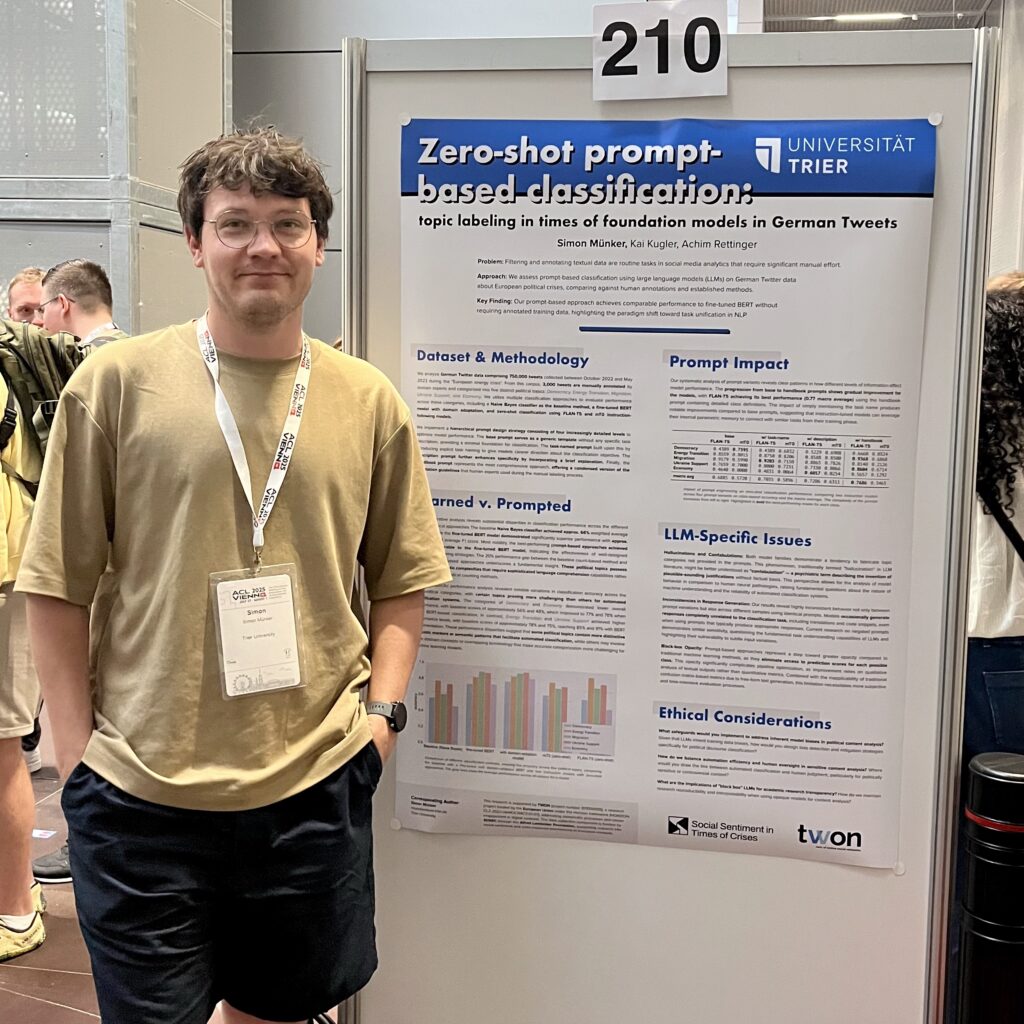
Simon Münker recently presented his research on the use of zero-shot, prompt-based classification for analysing political discourse on German Twitter during the European energy crisis at the 2025 Association for Computational Linguistics Conference in Vienna. He gave a poster presentation and a talk about his newly published paper.

In their paper, Dr. Achim Rettinger, Kai Kugler and Simon Münker assess advancements in NLP, specifically large foundation models, for automating annotation processes on German Twitter data concerning European crises.

The study explores how recent advances in large language models (LLMs) can reduce the need for long manual work when labeling and categorizing social media content. Instead of training models with thousands of examples, LLMs can follow written prompts to classify tweets in a zero-shot setting, meaning without prior training on the specific task.

The dataset used was collected from a German Twitter dataset based on survey questions from the SOSEC project about the energy crisis in winter 2022/23. Two domain experts and native speakers annotated a random sample of around 7,000 tweets.

The models that were evaluated included: a baseline Naive Bayes classifier using token counts; a fine-tuned German-specific BERT transformer (“gbert-base”)- a model further adapted with additional pretraining on domain-specific tweets to improve domain relevance; and instruction-tuned models based on T5, which follow prompts to classify texts without domain-specific fine-tuning using zero-shot prompting techniques.

The results show that prompt-based approaches perform almost as well as fine-tuned BERT models. The study therefore concludes that a prompt-based approach can achieve comparable performance to fine-tuned BERT without requiring annotated training data.

However, the study also emphasizes limitations such as the inherited and potentially amplified biases present in the training data and differences in outcomes related to the language used (German/English), as well as cultural nuances.

Automating the analysis of political and social debates raises questions about the role AI can and should play in interpreting sensitive public discourse.

Panel discussion: TWON researcher Jonas Fegert on “Who owns AI? On democratization, control and power relations”

On July 14th, TWON researcher Jonas Fegert (FZI Research Center for Information Technology), was invited as a panelist to the event “Who owns AI? On democratization, control and power relations” hosted by the House for Journalism and the Public Sphere in Berlin. The panel discussion explored how artificial intelligence can be shaped and governed democratically and what social, political and technological conditions are needed to make that possible.

At the heart of the discussion were fundamental questions about power structures in the field of AI. Today, artificial intelligence influences many areas of life, from work and education to everyday decision-making. Yet major developments in this space are often driven by large tech corporations without meaningful input from democratic institutions or the public. The panel reflected on what it could mean to democratize AI, who should have a say in its direction and what roles parliaments, research institutions and civil society can play in this process.

The event offered a valuable opportunity to engage with international experts from philosophy, social science and technology ethics. Many thanks to the organizers for the invitation and the insightful discussion.

New Publication: The Dual Impact of Virtual Reality: Examining the Addictive Potential and Therapeutic Applications of Immersive Media in the Metaverse

We are excited to share a new publication in Information, Communication & Society, titled “The Dual Impact of Virtual Reality: Examining the Addictive Potential and Therapeutic Applications of Immersive Media in the Metaverse” by Ljubiša Bojić, Jörg Matthes, Agariadne Dwinggo Samala, and Milan Čabarkapa.

As virtual reality (VR) technologies evolve rapidly and become important to the emerging metaverse, their influence on individuals and society is also growing. The study takes a closer look at how core features of VR, such as immersion, interactivity, real-time access, and personalization can have both harmful and helpful effects. By reviewing 44 peer-reviewed papers, they found that 19 studies identified these features as contributing to addictive behaviors, while 25 papers showed that the same features could be used to support addiction treatment, mental health care, and pain management.

This duality highlights the need to stop viewing VR as simply beneficial or harmful. Instead, it should be understood as a tool that can shape user behavior in different ways depending on design, context, and regulation. This work advances current understanding of VR by framing it as a media environment that closely mimics reality and deeply engages the senses making it both more compelling and potentially more risky than previous technologies. It also contributes to the growing discussion on how immersive technologies may change not only health and social interactions but also norms around communication, attention, and emotional well-being.

Based on these findings, it seems recommendable to advocate for stronger policy frameworks and design strategies to prevent overuse and media addiction. Suggestions include time-tracking tools, algorithmic diversity, and content moderation to avoid filter bubbles (communicative feedback loops). At the same time, the therapeutic potential of VR should be further developed in clinical settings where immersive environments can be safely and ethically used to support well-being.

📘 Access the full article here: https://doi.org/10.1080/1369118X.2025.2520005